

Coalbed Methane Horizontal Well Drilling: Well Profile and Borehole Design with CMD100
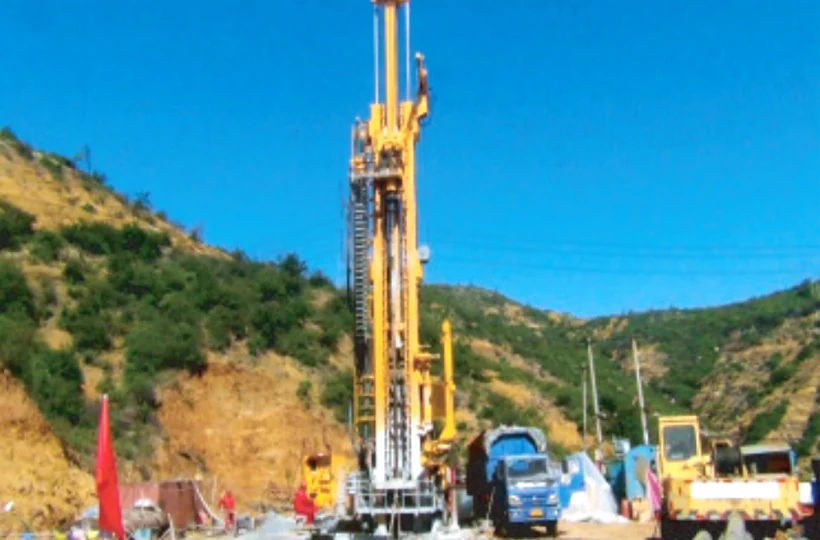
CORTECH CMD100 coalbed methane horizontal well drilling rig on a Qinshui Basin site
Executive Summary
A surface-based CBM drainage horizontal well in the Qinshui Basin shows exactly how a large-diameter horizontal wellbore is built: the CORTECH® CMD100 drilled a well with a vertical depth of 1,060 m, a 950 m horizontal section and a total depth of 2,010 m, reaching a maximum inclination of 88.42°. The borehole was opened at Φ311 mm, then finished at Φ216 mm, run on φ127 mm oil-based drill pipe, with the lateral extended after the build-up (kick-off) section. This case lays out the wellbore structure — hole sizes, drill pipe, inclination profile — that operators and engineers specify for CBM horizontal drainage.
Project Background & Challenge
Surface drainage horizontal wells are the workhorse of CBM production: they expose a long length of wellbore along the seam to maximize gas flow. Engineering the profile correctly is what makes the well work:
- Balanced depths: the vertical section must reach the seam (1,060 m vertical), then the lateral must run long enough (950 m) to pay off.
- Smooth inclination build: the well must build from vertical to near-horizontal (88.42° max) without doglegs that raise drag.
- Correct tubular program: hole diameter and drill pipe size must be matched so the string can be run and rotated through the lateral.
Our Solution
The CMD100 executed the full wellbore design:
- Opening at Φ311 mm: a large opening hole accommodates surface casing and gives the well a stable foundation.
- Build-up then lateral extension: after the kick-off/build-up section, the horizontal section was extended to 950 m at up to 88.42° inclination.
- Finished at Φ216 mm on φ127 mm oil-based drill pipe: the production hole diameter and the oil-based drill pipe were matched to deliver the long lateral with adequate stiffness and rotation control.
Key Results
| Metric | Value |
|---|---|
| Total depth | 2,010 m |
| Vertical depth | 1,060 m |
| Horizontal (lateral) length | 950 m |
| Maximum inclination | 88.42° |
| Opening (first) hole diameter | Φ311 mm |
| Final hole diameter | Φ216 mm |
| Drill pipe | φ127 mm oil-based drill pipe |
| Well type | Surface CBM drainage horizontal well |
For the full technical specifications of the CORTECH® CMD100, see the CMD100 product page.
Customer Value & ROI
- Spec-ready design data: the Φ311 mm opening to Φ216 mm final hole on 127 mm oil-based pipe is a concrete reference engineers can reuse for their own CBM horizontal well programs.
- Long drainage exposure: a 950 m lateral at 88.42° maximizes the well's contact with the seam, the core driver of CBM productivity.
- Matched tubulars: correctly sized drill pipe and hole diameters reduce drag and rotation losses in the lateral, lowering risk of stuck pipe.
- Proven profile: the 1,060 m vertical to 950 m lateral ratio is field-validated, not theoretical.
FAQ
What is the borehole structure of a CBM horizontal well?
It opens with a large lead hole (here Φ311 mm), builds angle from vertical to near-horizontal, then extends a lateral finished at a smaller production diameter (here Φ216 mm). This well ran to 2,010 m total depth on a 1,060 m vertical section plus a 950 m lateral.
What drill pipe size is used in CBM horizontal wells?
This well used φ127 mm oil-based drill pipe, sized to match the Φ216 mm finished hole and provide the stiffness needed to rotate and pull a 950 m lateral.
What opening and final hole diameters are used in CBM horizontal drilling?
The well was opened at Φ311 mm and finished at Φ216 mm — a common program that gives stable surface casing seating while keeping a productive production-hole diameter.
What is the vertical-to-horizontal depth ratio in a CBM lateral?
In this case the vertical section was 1,060 m and the lateral 950 m, reaching a maximum inclination of 88.42° and a total depth of 2,010 m.