

Hot Dry Rock Blowout Control Drilling Rig: CMD150T at 158°C, Tianzhen
Executive Summary
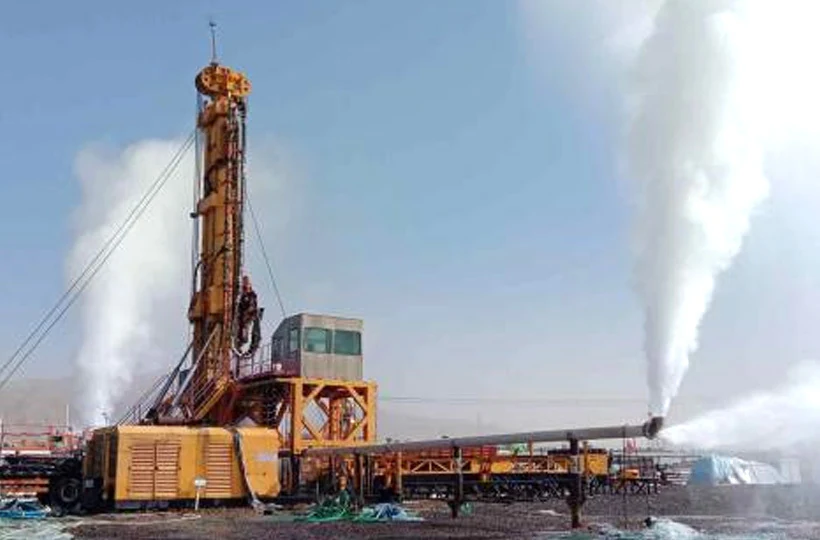
During drilling of a hot dry rock (HDR) exploration well in Tianzhen, Shanxi, the hole cut into a deep fault zone, triggering large water inflow. Where the hot groundwater contacted the dry hot rock, a sustained blowout developed — with wellhead water temperatures reaching 158°C that raged uncontrolled for two months. Standard rigs could not survive the heat: seals aged and failed, and hydraulic systems failed repeatedly. Jinneng Drilling mobilized the CMD150T fully hydraulic modular energy rig, engineered with a heat-resistant hydraulic system, special seals and high-strength structure rated for long-term operation at up to 160°C, together with a self-developed dedicated well-killing device and well-control process. On 24-hour standby with real-time monitoring, the rig endured the full two-month high-temperature trial and — without relying on other large equipment — independently completed the well-killing operation and shut in the blowout, solving a rare high-temperature HDR well-control problem and filling an industry technology gap.
Project Background & Challenge
Hot dry rock exploration targets geothermal heat stored in impermeable rock at depth. The Tianzhen well hit a geological trap:
- Deep fault zone + water inflow: drilling intersected a deep fault zone, admitting large volumes of water.
- Water meets hot rock → blowout: the hot groundwater contacting the hot dry rock produced a sustained, high-energy eruption.
- 158°C at the wellhead: the outflow water reached 158°C — a temperature ordinary equipment is not designed to endure for long.
- Two months uncontrolled: the blowout persisted for two months. Conventional rigs suffered aging seals and repeated hydraulic failures, and no on-site equipment combined high-temperature resistance, stability and high torque.
The situation was an acute emergency: uncontrolled high-temperature flow threatened personnel and equipment, and a mishandled response could have escalated the incident.
Our Solution
Jinneng Drilling urgently deployed its core emergency equipment package:
- CMD150T fully hydraulic modular energy rig: a heat-resistant configuration with high-temperature hydraulic system, special seals and high-strength structural design, certified for long-term stable operation at up to 160°C — matched to the 158°C outflow.
- Self-developed dedicated well-killing device: equipment purpose-built for the kill operation, rather than improvised from standard tools.
- Rigorous well-control process plan: a scientific, stepwise kill procedure prepared before execution.
- 24-hour standby monitoring: crews maintained continuous watch on both rig condition and blowout behavior, responding in real time.
Key Results
| Metric | Value |
|---|---|
| Location / program | Tianzhen, Shanxi — hot dry rock exploration well |
| Peak wellhead water temperature | 158°C |
| Blowout duration before control | 2 months (uncontrolled) |
| Rig heat-resistance rating | Up to 160°C, long-term stable operation |
| Monitoring posture | 24 h standby, real-time equipment/well monitoring |
| Outcome | Well-kill completed independently; blowout controlled |
| External equipment needed | None — rig completed the kill standalone |
| Industry significance | Solved a rare high-temperature HDR blowout; filled technology gap |
For the full technical specifications of the CORTECH® CMD150T, see the CMD150T product page.
Customer Value & ROI
- Emergency capability where none existed: on-site, high-temperature, high-torque equipment turned a two-month runaway well into a controlled operation — protecting personnel and equipment that were directly at risk.
- Rig that survived the heat: the 160°C-rated hydraulic and sealing package kept running through a continuous two-month high-temperature trial, where conventional rigs failed.
- Standalone operation: completing the kill without other large equipment removed dependencies and speeded the emergency response.
- Repeatable playbook: the rig, dedicated well-killing device and process now provide a proven reference for similar extreme-condition HDR emergencies in China.
FAQ
What caused the 158°C blowout at Tianzhen?
Drilling into a deep fault zone admitted large water inflow; where the hot groundwater contacted the hot dry rock, a sustained blowout developed, with wellhead water temperatures reaching 158°C.
How do you kill a high-temperature geothermal blowout?
The response combined a heat-resistant rig rated to 160°C, a purpose-built dedicated well-killing device, a rigorous well-control process plan, and 24-hour monitoring — here the rig independently completed the kill after a two-month uncontrolled event.
Can a drilling rig operate at 160°C?
Standard rigs cannot — ordinary seals age and hydraulics fail. The CMD150T uses a high-temperature hydraulic system, special seals and high-strength structure designed for long-term stable operation at up to 160°C.
What is hot dry rock exploration drilling?
It is drilling deep wells into impermeable hot rock to assess geothermal heat for power or direct use; it carries distinct well-control risks where fault water intersects the hot reservoir.
Internal Links
- Rig product page
- Application hub
- Related case
- Related case
- Related case (cross-hub)
- FAQ knowledge base