

Mine Rescue Borehole Drilling Rig: CMD100 Air DTH Supply Hole Through 117 m
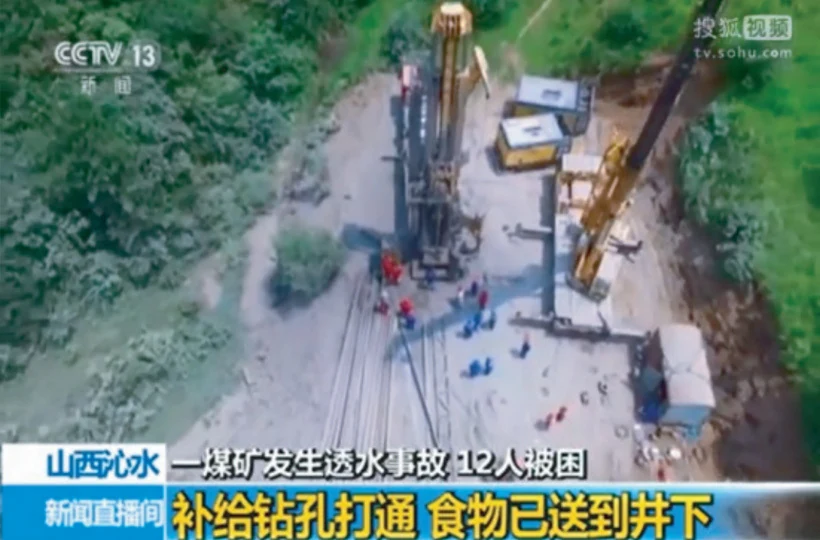
CORTECH CMD100 mine rescue borehole drilling rig opening an air DTH supply hole
Executive Summary
In a mine rescue operation, a supply borehole is the lifeline that carries food, water and medicine to trapped miners until they can be brought out. Working with an air down-the-hole (DTH) hammer, the CORTECH® CMD100 drilling rig drilled through a supply hole in 8 hours, delivering the first nutritional supplies to miners who had been trapped underground for 36 hours. The borehole was built in two casing programs: a first opening of 311 mm to 11.18 m with φ245 mm surface casing, then a second opening of 215.9 mm to 117 m through the roadway, lined with φ139.7 mm casing to protect the borehole wall. The life-support passage was completed successfully.
Project Background & Challenge
A rescue supply borehole has to do two jobs at once: reach the trapped crew fast, and stay open long enough to keep passing supplies through it. The challenges are:
- Time pressure: the miners had already been trapped 36 hours; every hour delayed nutrition, hydration and medical support.
- Stable borehole in broken ground: without proper casing, the borehole walls could collapse before supplies got through — a real risk in disturbed mine ground.
- Accurate target: the hole had to reach the roadway level 117 m down so supplies landed where the miners were.
Our Solution
The CMD100 executed a two-stage casing program with an air DTH hammer:
- First opening, 311 mm to 11.18 m: the large lead hole secured the shallow section and accepted a φ245 mm surface casing to seal off loose surface ground.
- Second opening, 215.9 mm to 117 m: the hole then drilled through to the roadway at 117 m, with a φ139.7 mm casing run to protect the borehole wall against collapse.
- Air DTH hammer process: air-powered hammer drilling gave fast, clean penetration without fluid that could worsen water conditions underground.
Key Results
| Metric | Value |
|---|---|
| Drilling method | Air DTH hammer |
| Rig | CORTECH® CMD100 |
| Time to drill through supply hole | 8 hours |
| Miners supported | Trapped 36 hours underground, first nutrition delivered |
| First opening | 311 mm, 11.18 m deep |
| Surface casing | φ245 mm |
| Second opening | 215.9 mm, 117 m deep (through roadway) |
| Lining casing | φ139.7 mm (borehole wall protection) |
For the full technical specifications of the CORTECH® CMD100, see the CMD100 product page.
Customer Value & ROI
- Faster lifeline: an 8-hour supply-hole breakthrough converted a 36-hour entrapment into a resupply situation, materially improving survival conditions.
- Stable passage: the two-stage casing program (245 mm surface, 139.7 mm lining) kept the borehole open so supplies kept flowing.
- Dry, safe drilling: air DTH hammer drilling avoided introducing fluid into already-hazardous mine conditions.
- Repeatable procedure: the 311 mm → 215.9 mm casing sequence is a documented template for future rescue supply holes.
FAQ
What casing program is used for a mine rescue supply borehole?
Two stages: a 311 mm first opening to 11.18 m lined with 245 mm surface casing, then a 215.9 mm second opening to 117 m lined with 139.7 mm casing to protect the wall.
How long does it take to drill a rescue supply hole?
Using an air DTH hammer on the CMD100, this supply hole was drilled through in 8 hours, reaching miners who had been trapped for 36 hours.
Why use an air DTH hammer for mine rescue drilling?
Air hammer drilling penetrates fast and cleanly without drilling fluid, avoiding added water or fluid burden in already-hazardous underground conditions.
What diameter casing is run in a rescue borehole?
A 245 mm surface casing in the shallow 11.18 m section and a 139.7 mm lining casing through the 117 m roadway section, keeping the supply passage open.