

Pure Hydraulic vs. Electro-Hydraulic: Choosing the Most Reliable Core Drilling Rig for Harsh Environments
When managing remote mineral exploration projects, equipment downtime is the ultimate profit killer. In remote mining sites or deep forests, a minor component failure can halt operations for days while waiting for specialized technicians.
Among geological drillers, a critical debate continues: Should you choose a modern electro-hydraulic (electric-over-hydraulic) rig, or stick to a pure hydraulic core drilling rig?
While electro-hydraulic systems boast smart features on paper, field experience tells a different story. Let’s break down the failure rates, maintenance realities, and why mechanical simplicity often wins the day in exploration drilling.
The Reality of "Electric-over-Hydraulic" in the Field: A Maintenance Nightmare
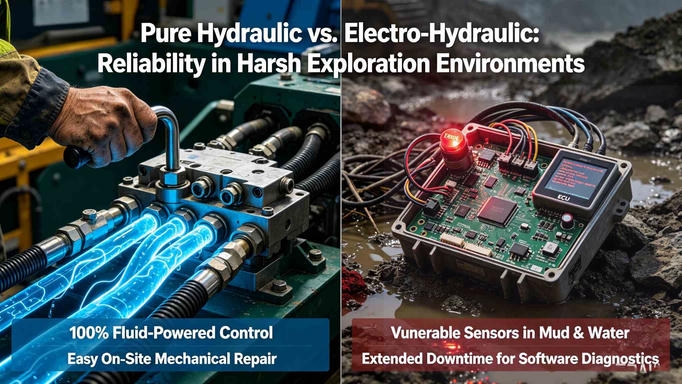
Electro-hydraulic rigs rely heavily on electronic control units (ECUs), sensors, and complex wiring harnesses to actuate hydraulic valves. While this provides precise digital feedback, it introduces vulnerability to the drill site.1.High Failure Rates in Extreme Environments: Exploration drilling is inherently messy. Drilling fluids, mud, heavy vibrations, and constant moisture are kryptonite to sensitive electronic chips and sensors.
2.The Remote Repair Bottleneck: If an electronic sensor fails in a remote exploration camp, a standard drilling crew cannot fix it. Troubleshooting requires advanced diagnostic software and specialized electronics expertise. The result? Extended, costly downtime.
Why Pure Hydraulic Control Rules Remote Exploration
- For geological drilling where reliability is paramount, a pure hydraulic core drilling rig remains the gold standard. In these systems, operators control hydraulic valves directly via mechanical levers. There are no computer screens or sensors standing between the driller's hand and the drill string.
- Straightforward Troubleshooting: Hydraulic issues are physical. A leaked seal or pressure drop can be visually diagnosed and mechanically repaired on-site using standard tools.Empowered Drillers: Experienced drillers understand fluid power. They can fix a hydraulic valve or swap a hose themselves, keeping the project moving without waiting for an automation engineer.